Fisher, Lewis F.
No Cause of Offence: A Virginia Family of Union Loyalists
No Cause of Offence: A Virginia Family of Union Loyalists
Couldn't load pickup availability
Fisher, Lewis F.
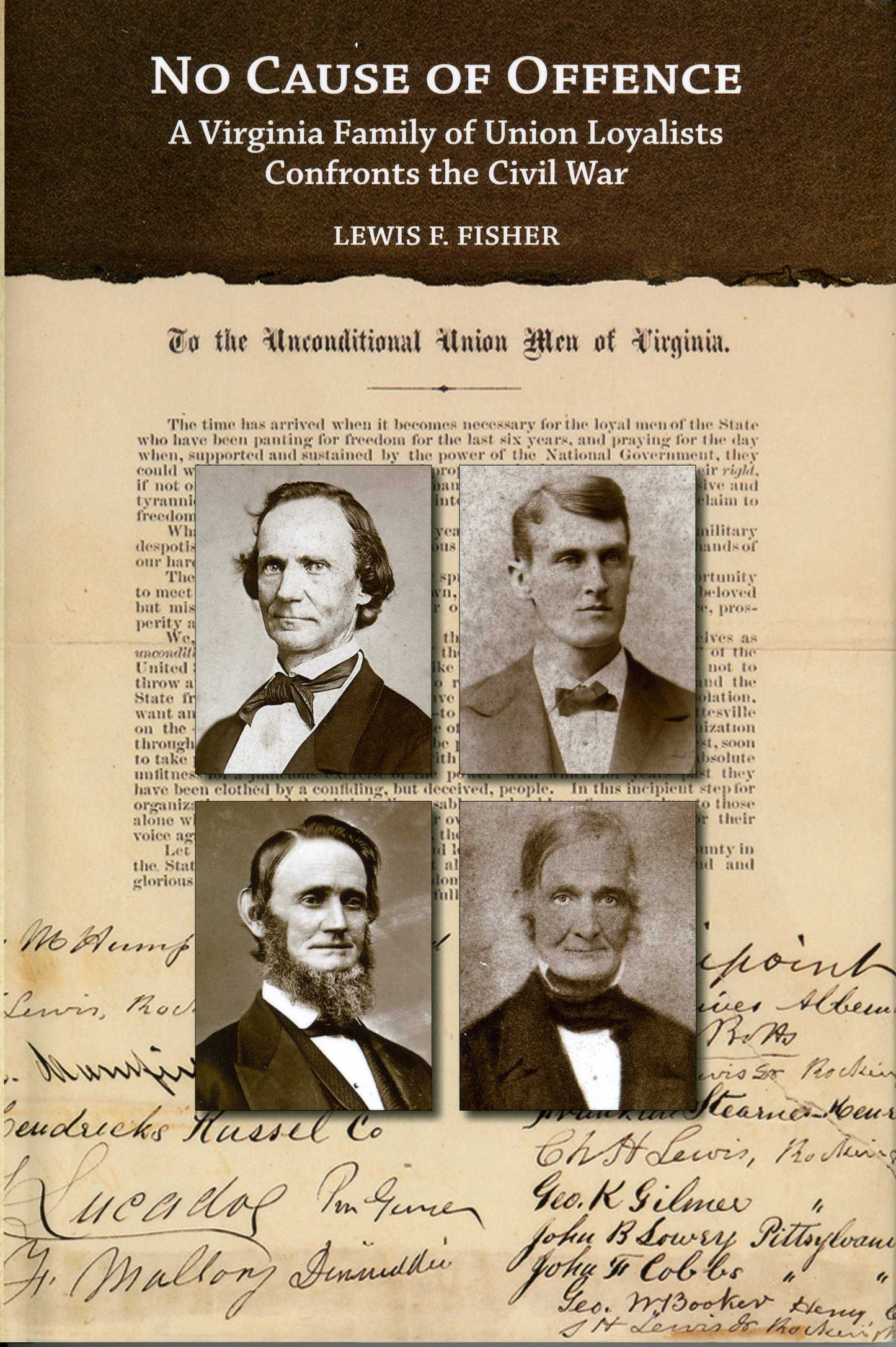
Despite the common image of a Solid South, many southerners stayed loyal to the Union during the Civil War and coexisted uneasily with their Confederate neighbors. In the Shenandoah Valley of Virginia, the family of Samuel Hance Lewis remained convinced of the wisdom of the Founding Fathers in establishing a single nation. A vast majority of Rockingham County neighbors disagreed. The Lewises adapted pragmatically and sought to give no cause of offense by overt act or anything of the sort. But neither did they hide their convictions, made clear even to Confederate Gen. Stonewall Jackson as he made their home his headquarters.
In 1862, the family fled across the Shenandoah River and watched the Battle of Port Republic swirl around their homes. Afterward, as their neighbors treated wounded Confederates, the Lewises tended to wounded Union soldiers. Halfway up the Blue Ridge, John F. Lewis, a Secession Convention delegate who refused to sign the Ordinance of Secession, was running an iron furnace that kept dozens of Union Loyalists out of the Confederate army. Later, four family members left the Shenandoah Valley for the balance of the war as refugees under the protection of Union Gen. Philip Sheridan's army.
After the war, the Lewises joined neither radical Republicans bent on revenge nor conservative former Confederates seeking to reestablish the old order. They backed compromises that ended Reconstruction and restored Virginia to its old place in the Union, and rose to positions of high leadership. John F. Lewis became U.S. Senator and, twice, lieutenant governor. Charles H. Lewis became secretary of the commonwealth and U.S. Minister Resident to Portugal. Lunsford L. Lewis served for twelve years as chief justice of the Supreme Court of Virginia.
Efforts for compromise and moderation of the last family member of the era came to an end in 1905, with the defeat of Lunsford Lewis as Republican candidate for governor. Conservatives thereafter were little challenged, and governed uninterrupted until the civil rights movement returned Republicans to the statehouse in 1970.
123 pages; San Antonio, TX: Maverick Publishing Co., 2012. Bibliography, Index.
Share